
How Long Does SEO Take to Show Results?

B2B marketing team discussing strategies based on how long SEO takes to show results.

How Long Does SEO Take to Show Results?

Most B2B businesses want to know how long SEO takes to show results like higher rankings, more traffic, and qualified leads. While there’s no one-size-fits-all timeline, most companies can start seeing improvements within 3-6 months, with noticeable results often developing over 6-12 months

In this blog, you’ll learn about the usual timeline for getting SEO results, what metrics you need to track when, and how Simplified Marketing can help B2B businesses achieve better results faster. 

What Can You Realistically Expect From SEO in the First Year?

Studies place meaningful SEO progress within the 4–12 month range, though targeting less competitive keywords can help you reach the first page of search engines like Google or Bing with rankings in 61-182 days. It takes this long for SEO to show results because search engines need time to understand your website, evaluate your content, and decide whether it answers what people are searching for. 

You can get a better sense of this timeline below:

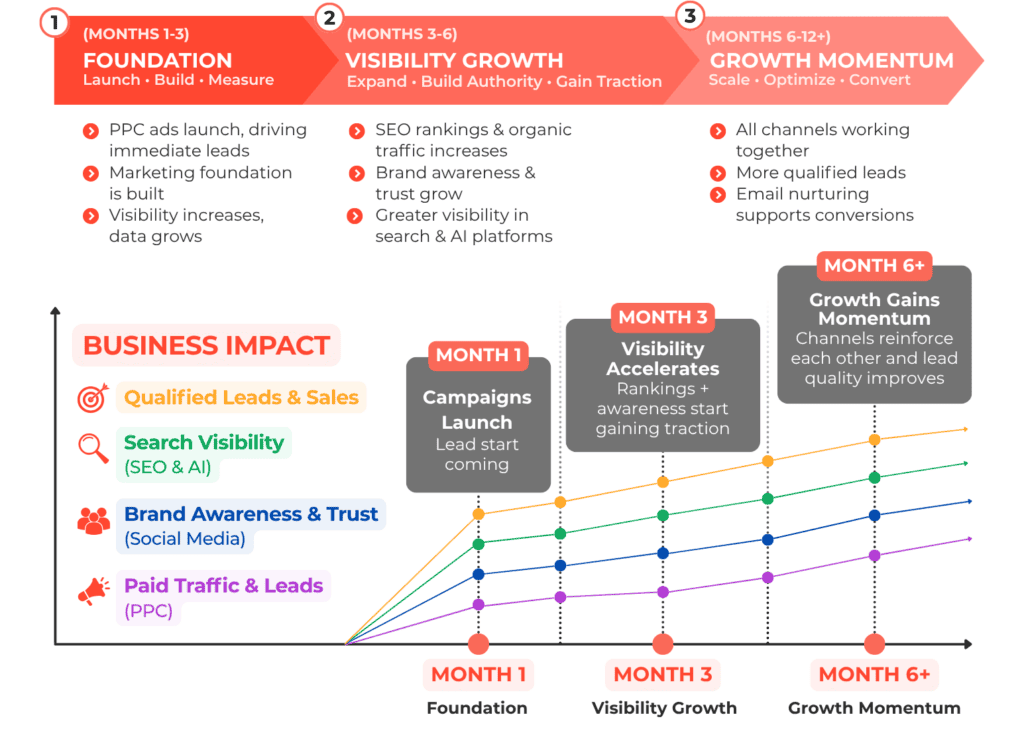
Months 1-2: Build the Right Foundation

B2B marketing services spend the first few months strengthening your website, including:

  • Fixing technical SEO issues that affect crawling and indexing
  • Researching keywords that match your audience’s search interest
  • Creating a content plan based on business priorities
  • Improving website structure (schema markup, hierarchy structure, etc) and internal linking

Months 3-6: Rankings Start Moving

During this stage, businesses commonly see:

  • Higher search impressions 
  • Better rankings for long-tail keywords
  • Steady increases in organic traffic

Months 6-12: Results Become More Visible

After the first few months, you may notice:

  • Higher rankings for more competitive keywords
  • Increased organic traffic and more consistent lead generation
  • Better conversion opportunities from existing content

It’s helpful to know how long SEO takes to show results, but businesses must also understand which performance indicators they need to measure.

Are You Looking at the Right SEO Numbers?

It’s easy to focus on keyword rankings because they’re visible, but they don’t tell the whole story. Here are some SEO metrics you should focus on instead:

Primary Business Metrics

These numbers show whether your investment in B2B SEO services is supporting sales and business growth.

  • SEO-generated leads: How many calls, form submissions, quote requests, demo requests, or other leads came from organic search?
  • Qualified lead rate: Of those SEO leads, how many were actually a good fit for your business?
  • Pipeline generated from SEO: How much potential revenue can be tied back to leads that originally found you through organic search?
  • SEO-generated revenue: How much closed business can you directly or indirectly attribute to organic search?

Supporting SEO Metrics

B2B SEO agencies track these supporting metrics, giving you an idea of how your campaigns are improving.

  • Search visibility and impressions: Growing visibility shows that Google is presenting your content for more relevant searches, even across Google AI Overviews. Tracking this growth over time can also give you a better understanding of the timeline for SEO results before that visibility starts turning into more traffic and leads.
  • Keyword rankings: Higher positions (like ranking #1) on search results is a useful indicator for how your SEO efforts are doing, especially for important commercial keywords your customers are actively searching, but they should never be viewed in isolation.
 

For tools, you can use Google Analytics (GA4) to measure conversions, user engagement, and lead attribution. Google Search Console helps track impressions, traffic, click-through rates, and keyword visibility, while Google Data Studio brings these insights together for a complete view of your SEO performance. You can also use Semrush for competitor insights and website performance.

Once you know what to measure, the next question is whether you can speed up the timeline for getting SEO results.

Can You Get SEO Results Faster?

While you can’t force SEO to deliver results faster, you can build consistent momentum by focusing on improvements that have the biggest impact. Here’s how: 

  • Refresh Outdated Content: Updating older pages with current information, new statistics, and other updates signals to search engines that your content is still relevant. B2B content marketing services can help you update content faster than writing new pages from scratch.
  • Optimize Content That’s Already Ranking: Content already ranking on pages 2 or 3 usually needs refinement. Improving headings, expanding sections that answer user questions, strengthening internal links, and updating metadata can help move these pages higher in search results.
  • Fix Keyword Cannibalization: When multiple pages compete for the same keyword, search engines may struggle to determine which one deserves to rank. Consolidating overlapping content or clarifying each page’s purpose helps strengthen your overall visibility.
  • Target Low-Competition, Long-Tail Keywords: Highly competitive keywords can take years to rank well. But specific, long-tail keywords often have lower competition and stronger search intent, allowing you to build visibility faster.
  • Strengthen Internal Linking: Internal links help search engines understand how your content is connected while guiding visitors to additional resources. They also distribute authority across your website, helping important pages perform better over time.
  • Add Structured Data: Schema markup gives search engines additional context about your content. While structured data doesn’t directly speed up the timeline for SEO results, it can increase visibility by enhancing your search listings with images, carousels, and more.
 

Partnering with an experienced B2B digital marketing company can help prioritize these opportunities and avoid spending time on changes that have little impact.

How Simplified Marketing Can Help You Build SEO Momentum

Simplified Marketing’s B2B SEO services help established companies attract qualified buyers, educate decision-makers throughout longer sales cycles, and turn organic search into a consistent source of business growth. As a top-rated B2B digital marketing agency, we focus on measurable business outcomes rather than vanity metrics. 

Here’s how we build on that momentum:

Start generating leads sooner with PPC: Paid search can put your business in front of buyers who are actively searching while SEO is still gaining traction.

Build SEO and AI visibility: Since SEO takes time to show results, we build your presence in traditional search and AI platforms over time so more buyers can find you as they research their options.

Build awareness and trust with social media: Consistent social content keeps your company visible and gives buyers more opportunities to become familiar with your brand before they’re ready to reach out.

Bring the channels together: As SEO gains traction, PPC, social media, organic search, and AI visibility can reinforce each other and create more opportunities for qualified leads and sales.
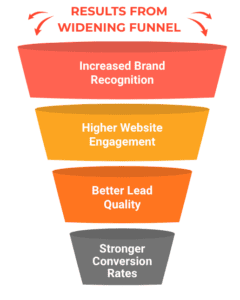
Widening marketing funnel illustrating how long SEO takes to show results, as increased brand recognition and website engagement contribute to better lead quality and stronger conversion rates.

The goal isn’t just to rank higher. It’s to build enough visibility across search, AI, paid ads, and social media that the right buyers keep finding your business. While SEO takes time to show results, each channel helps build momentum along the way. As that visibility grows, so do your opportunities to generate qualified leads and sales.

Ready to build your SEO momentum? Get a Free Consultation with Simplified Marketing.
FAQs About the Timeline of SEO Results

These are some of the most common questions businesses ask when trying to understand how long SEO takes to produce results.

Why do some websites see SEO results faster than others?

Some websites see SEO results faster because they already have a strong foundation. Factors such as website authority, technical performance, content quality, keyword competition, and publishing consistency all influence the timeline of SEO results. Businesses targeting less competitive keywords may also see results sooner than those competing in highly saturated industry search terms.

Google Ads won’t directly improve your organic rankings because paid advertising and SEO use different ranking systems. However, Google Ads can help you identify high-performing keywords, test your messaging, and generate traffic while your SEO strategy builds momentum and authority over time.

Yes, you should keep investing in SEO even after you reach page one because search engine algorithms change constantly, and your competitors are actively trying to outrank you. B2B digital marketing agencies like Simplified Marketing can help you refresh content, fix technical issues, and optimize existing pages, protecting your rankings and maintaining long-term visibility.

If you’ve seen little progress after six months and find yourself wondering why it’s taking longer to show SEO results, it helps to review your content quality, keyword strategy, and competition before assuming that SEO isn’t working at all. An experienced B2B marketing agency like Simplified Marketing can identify what’s limiting performance and recommend improvements that better support traffic, lead generation, and business growth.

Picture of Morgan Monaghan

Morgan Monaghan

CEO and founder of Simplified Marketing, helping technical and B2B companies in highly regulated markets turn strategy, SEO, and digital campaigns into measurable growth.

Leave a Reply

Your email address will not be published. Required fields are marked *

Recent Posts

Social Networks

Facebook
Twitter
LinkedIn
WhatsApp

Recent Posts

Help us improve your experience

We use cookies to remember your settings, load pages faster, and show you offers you’ll find relevant. Some are essential for the site to work, while others help us understand what you like. You can change your preferences at any time.